
Replica Etruscan Bronze Alpu Apulu Apollo Roman Greek Figurine Statue Statuette
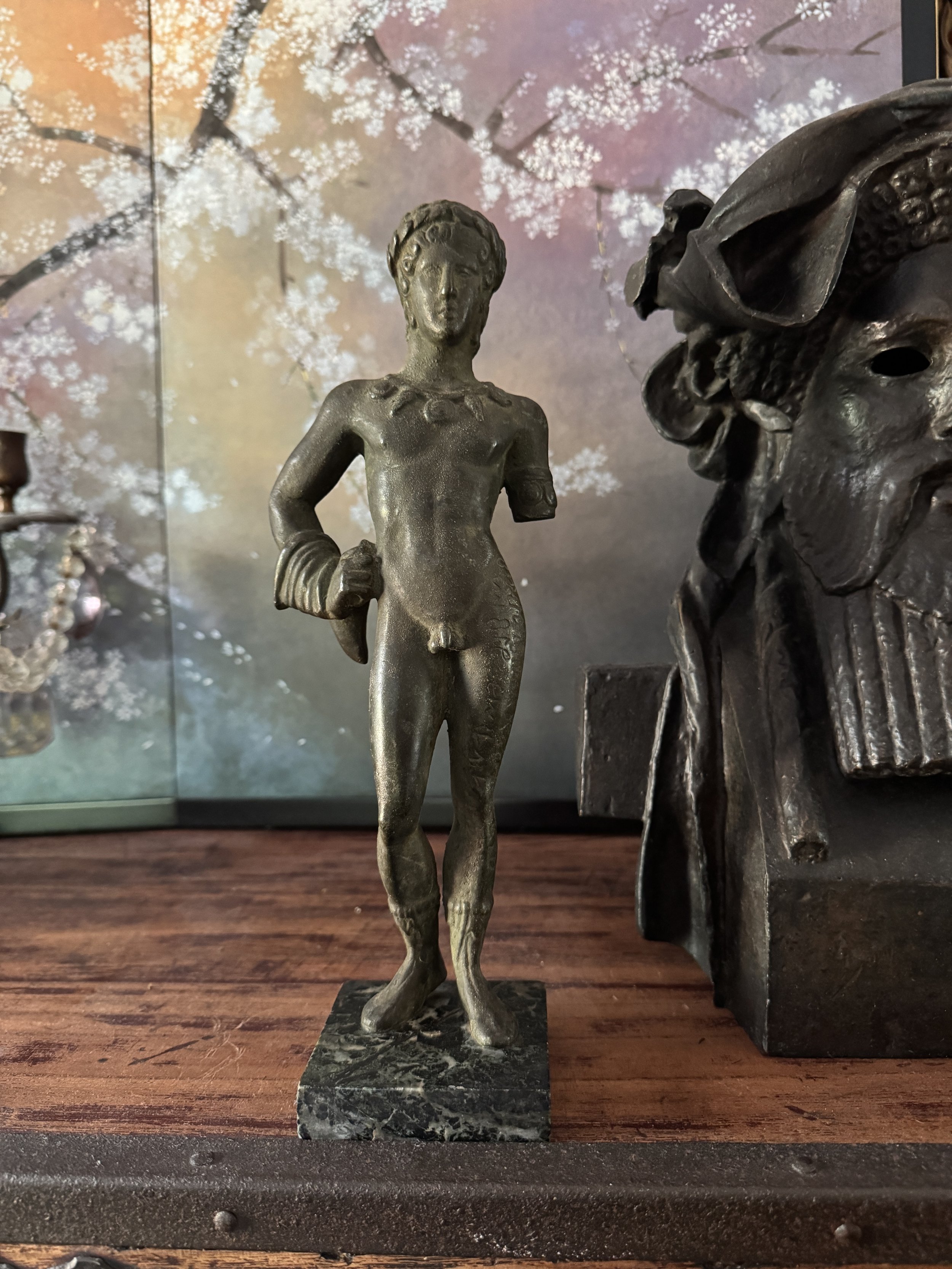
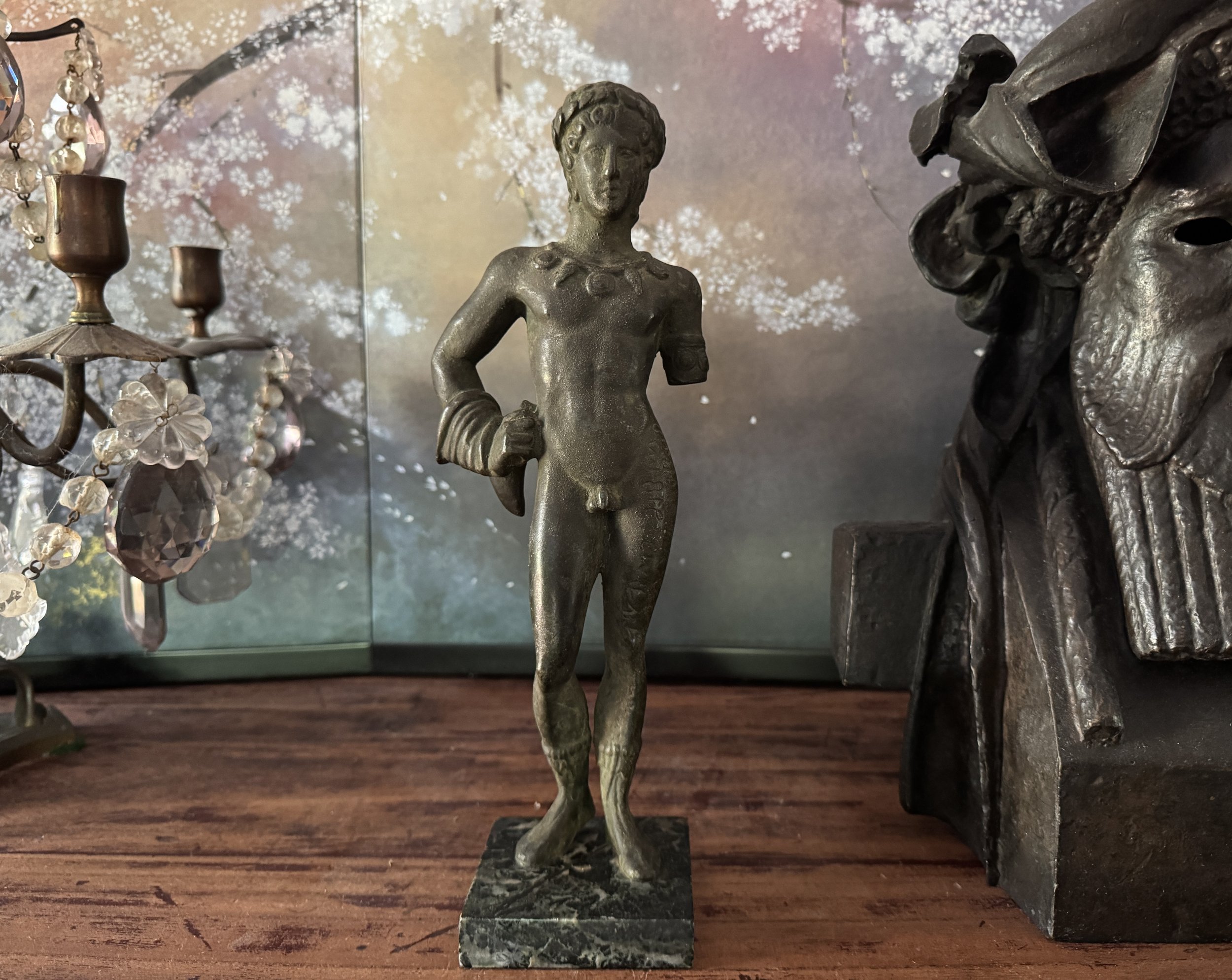
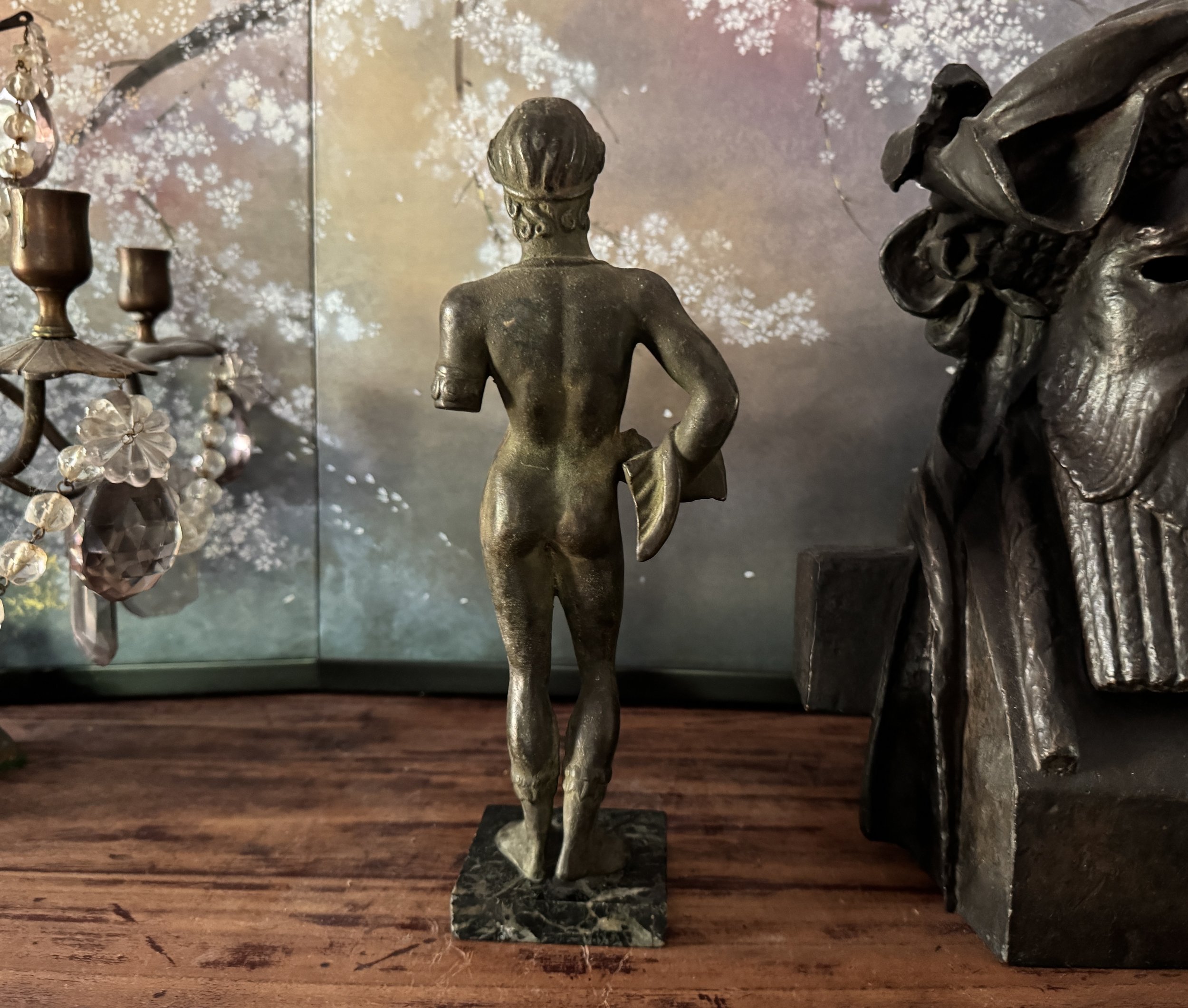
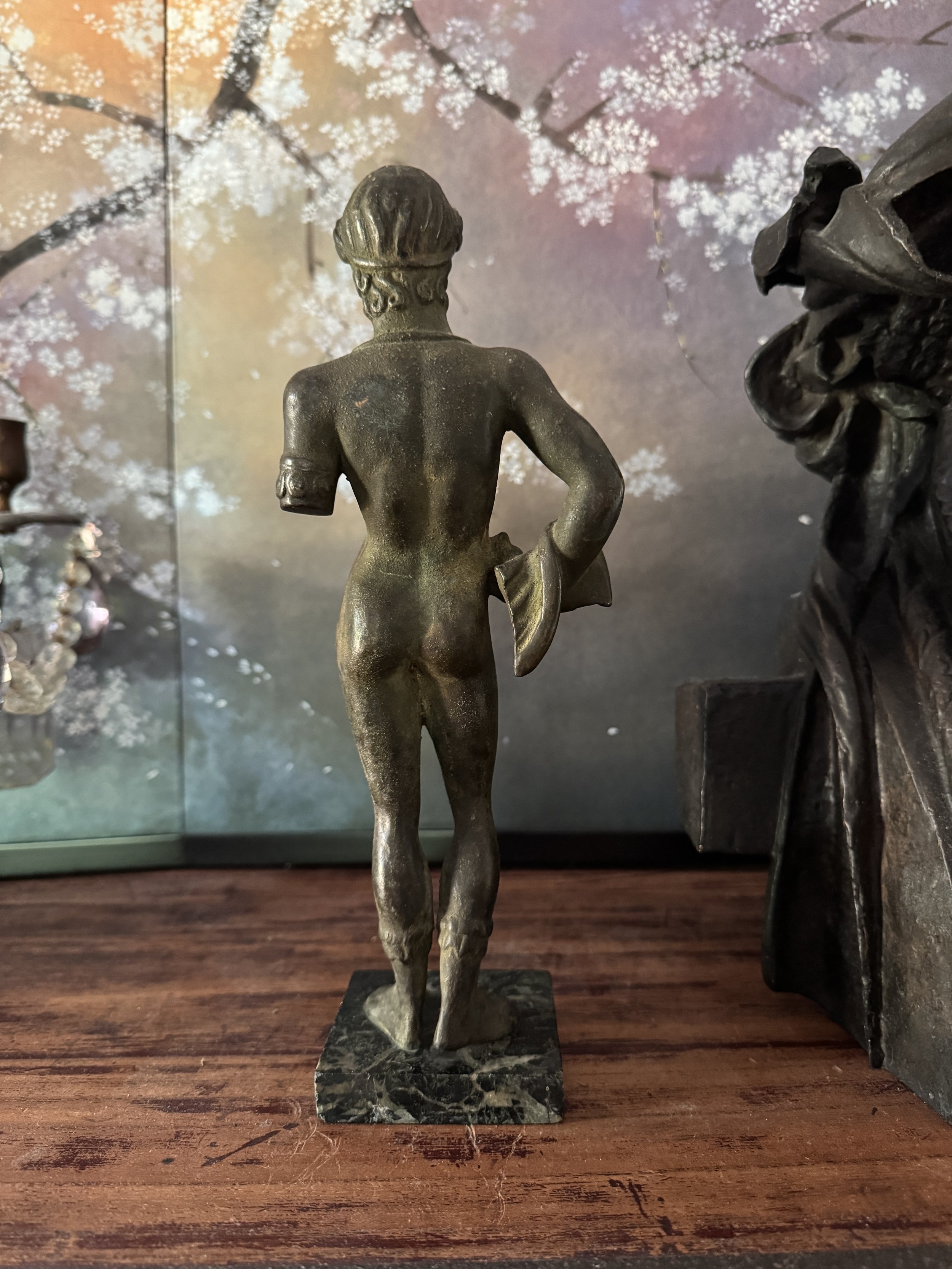
Replica Etruscan Bronze Alpu Apulu Apollo Roman Greek Figurine Statue Statuette
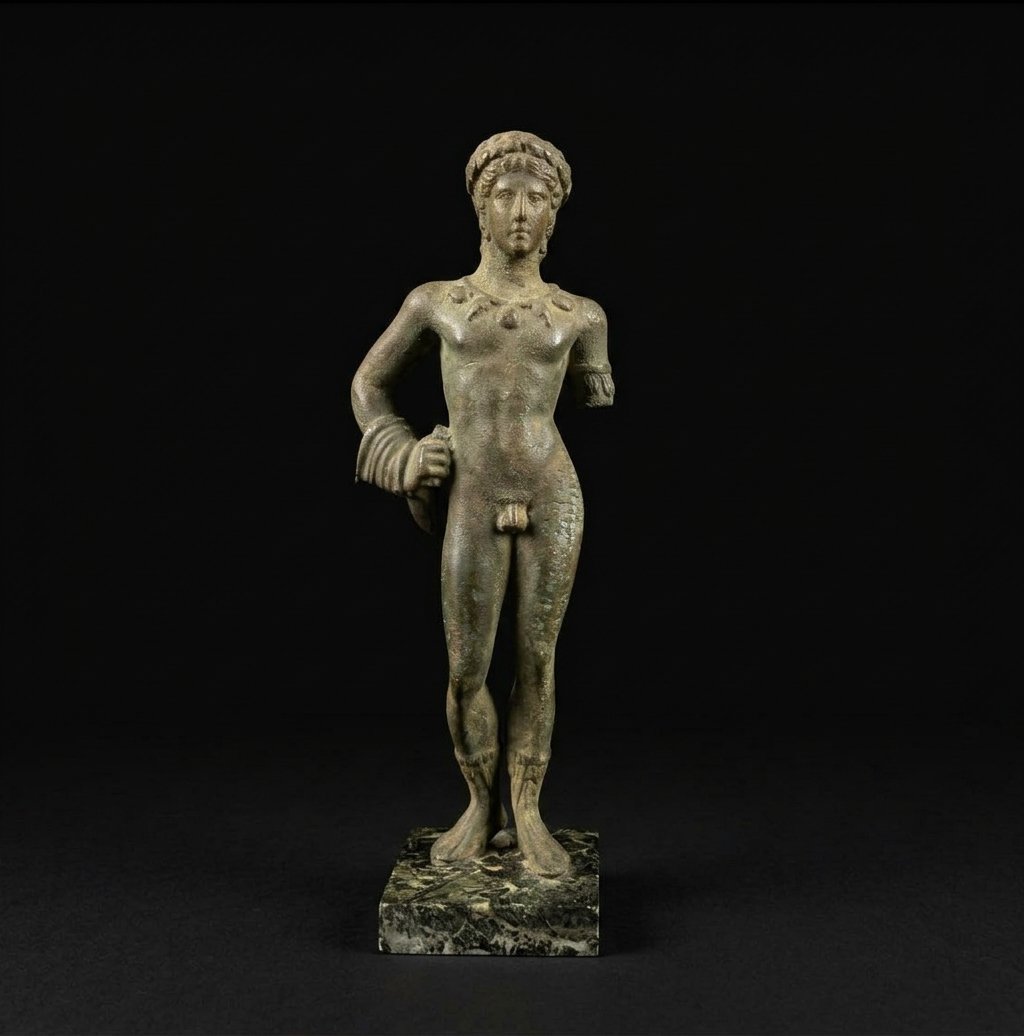
Etruscan Apulu/Aplu (Apollo) Bronze
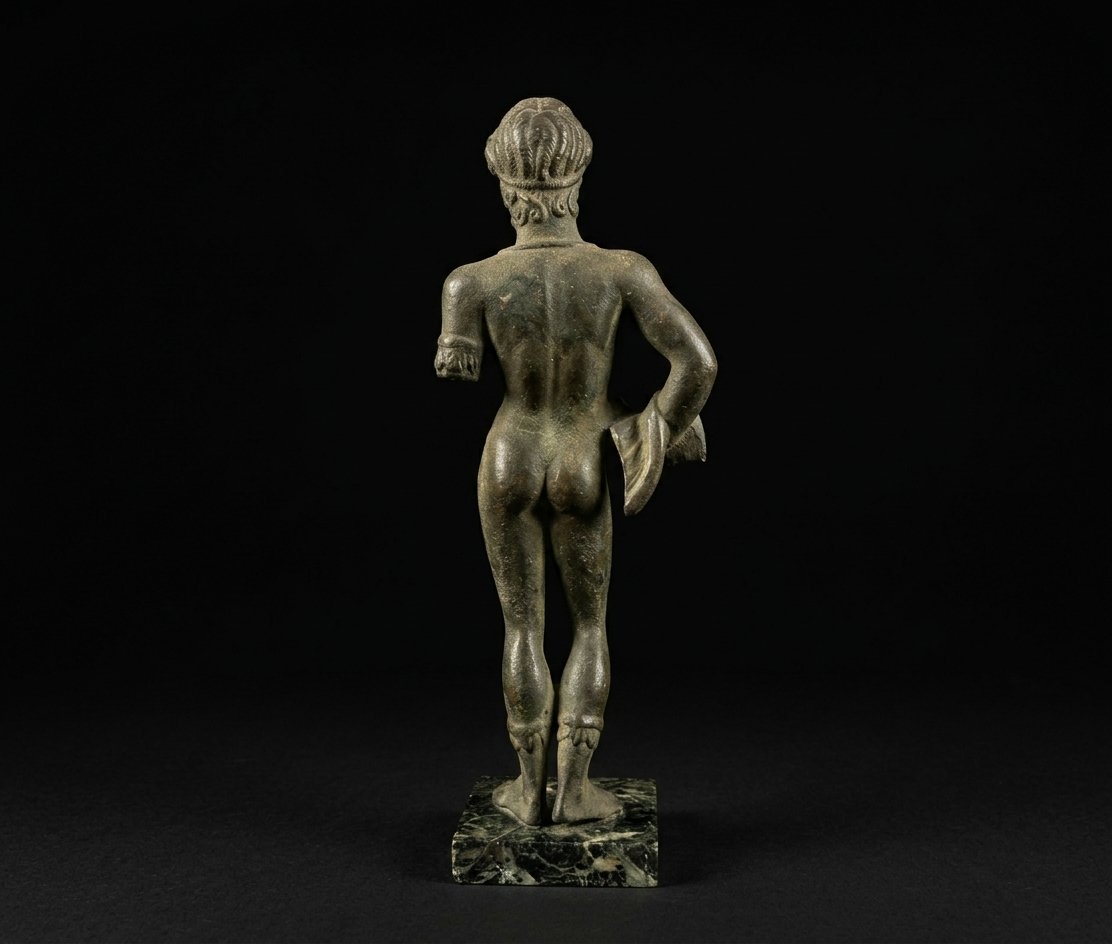
This very rare 19th century solid bronze French antique figurine, it depicts Aplu, the Etruscan god of thunder, and dates from the 19th century. He later became absorbed; or conflated into the worship of the Greek god Apollo.
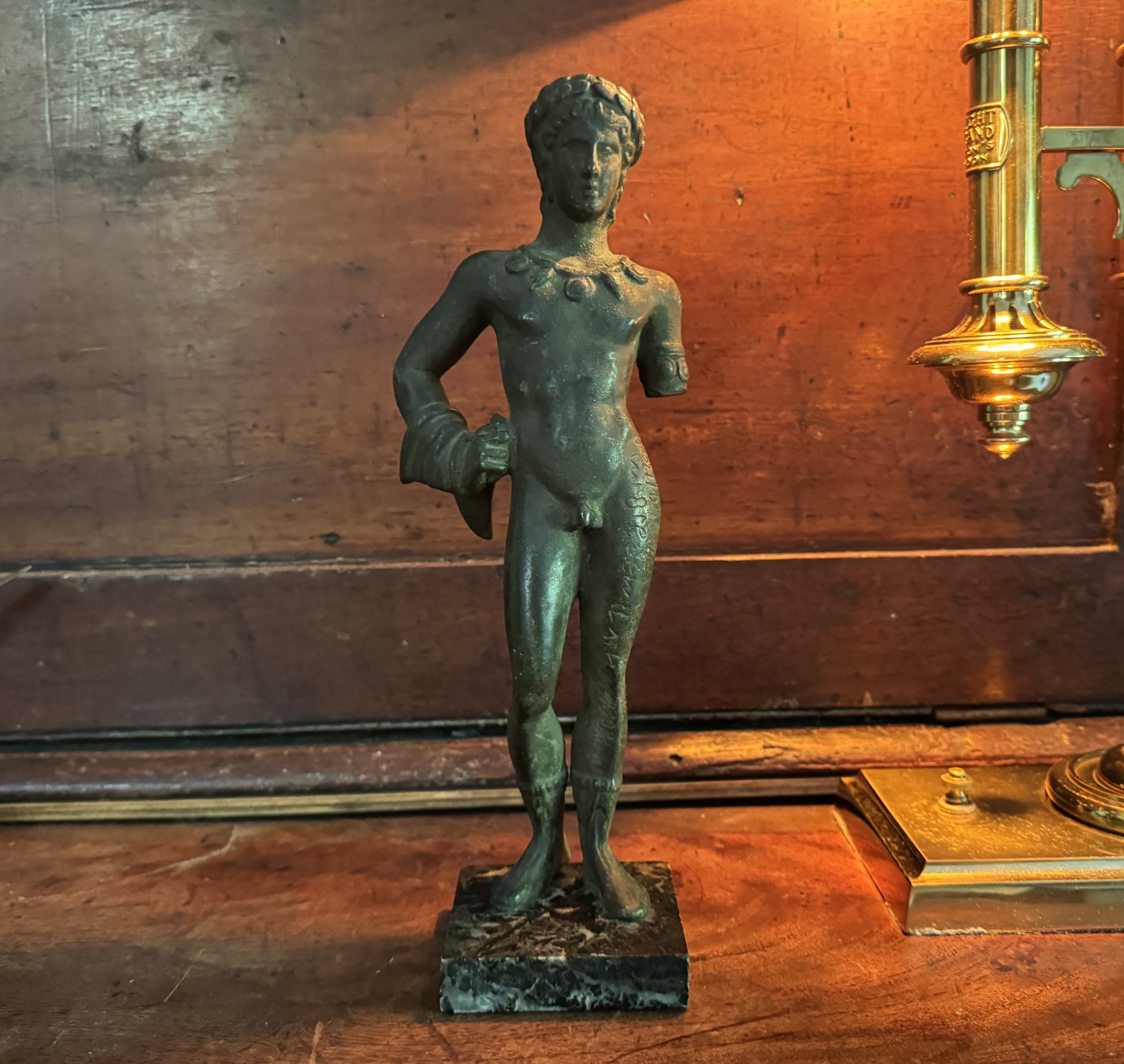
The original is apparently in the National Library of France, but I can't find the object information online, just matching image library content. Arm partially missing, and an ancient inscription appears on the right leg. Matching the original.
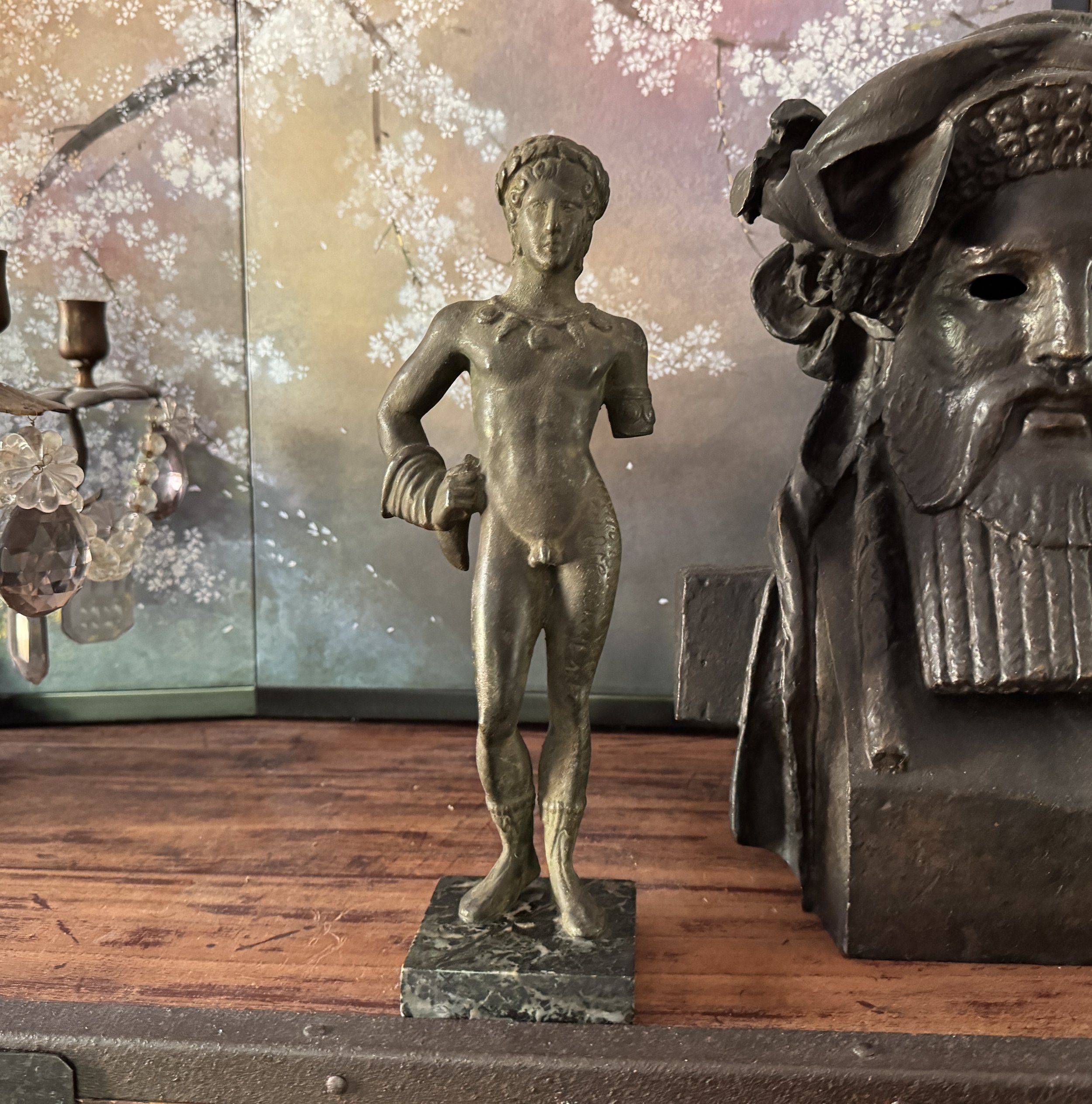
It's a larger size, 28 cm tall (11”) and very heavy, at 1.95 kg (4 Ibs, 5 ounces). Wonderful antique bronze patina. No dents or scratches etc. Attached to the base by two nuts that can be tightened. Corners of the marble base are very slightly chipped.
This piece has been appraised in value by renowned antiques appraiser, Dr. Lori Verderame, who is featured as an antiques expert worldwide. (See last photo).
Apulu (Etruscan: 𐌀𐌐𐌖𐌋𐌖), also syncopated as Aplu (Etruscan: 𐌀𐌐𐌋𐌖), is an epithet of the Etruscan fire god Śuri as a chthonic sky god, roughly equivalent to the Greco-Roman god Apollo. Their names are associated on Pyrgi inscriptions too.
The name Apulu or Aplu did not come directly from Greece but via a Latin center, probably Palestrina. Under the name Apulu, he is known as the god of the Sun and light, thunder and lightning, healing and plague, as well as the protector of divination, but he also has volcanic and infernal characteristics. He was also known as Rath, Usil and Vetis, among other names.
He's mentioned as son of Tinia and Semla, brother of Fufluns and twin brother of Aritimi. In art, he is depicted with a crown and laurel branches. His most famous representation is the Apollo of Veii, attributed to Vulcas. He does not appear on the Liver of Piacenza. (wiki)