
Antique Print Nicolas Poussin Echo Narcissus Narcisse Gérard Audran Louvre
Antique Print Nicolas Poussin Echo Narcissus Narcisse Gérard Audran Louvre
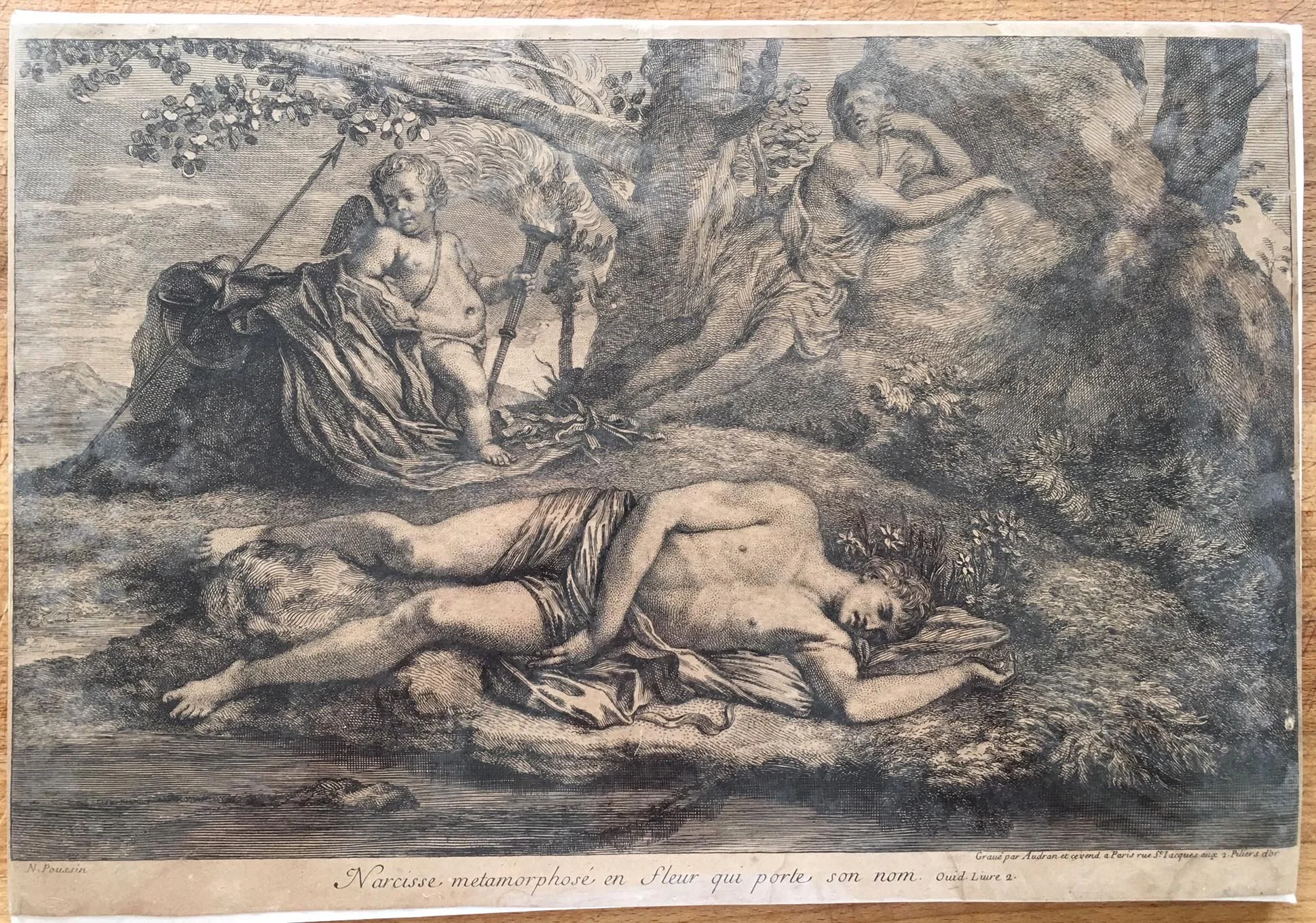
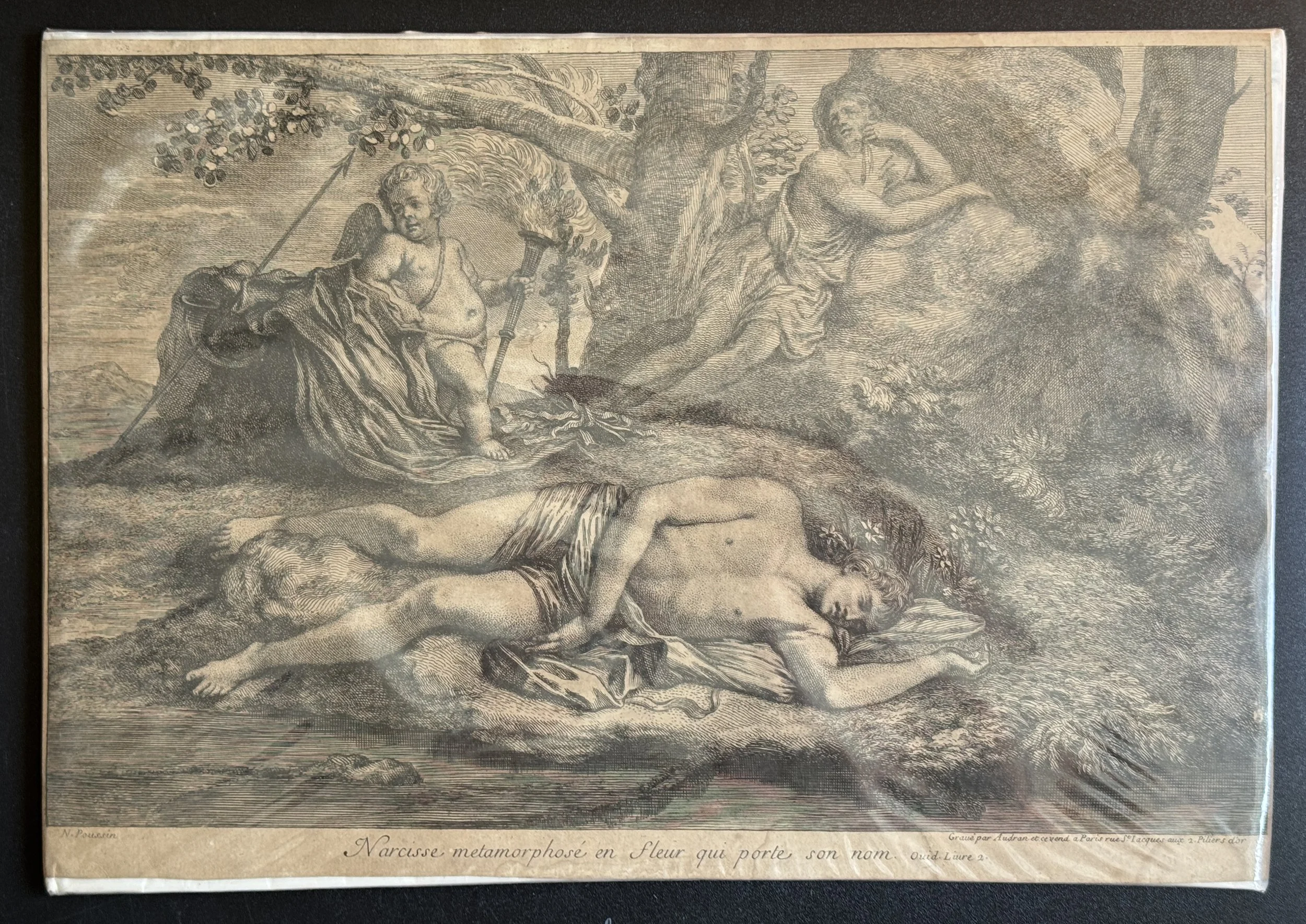
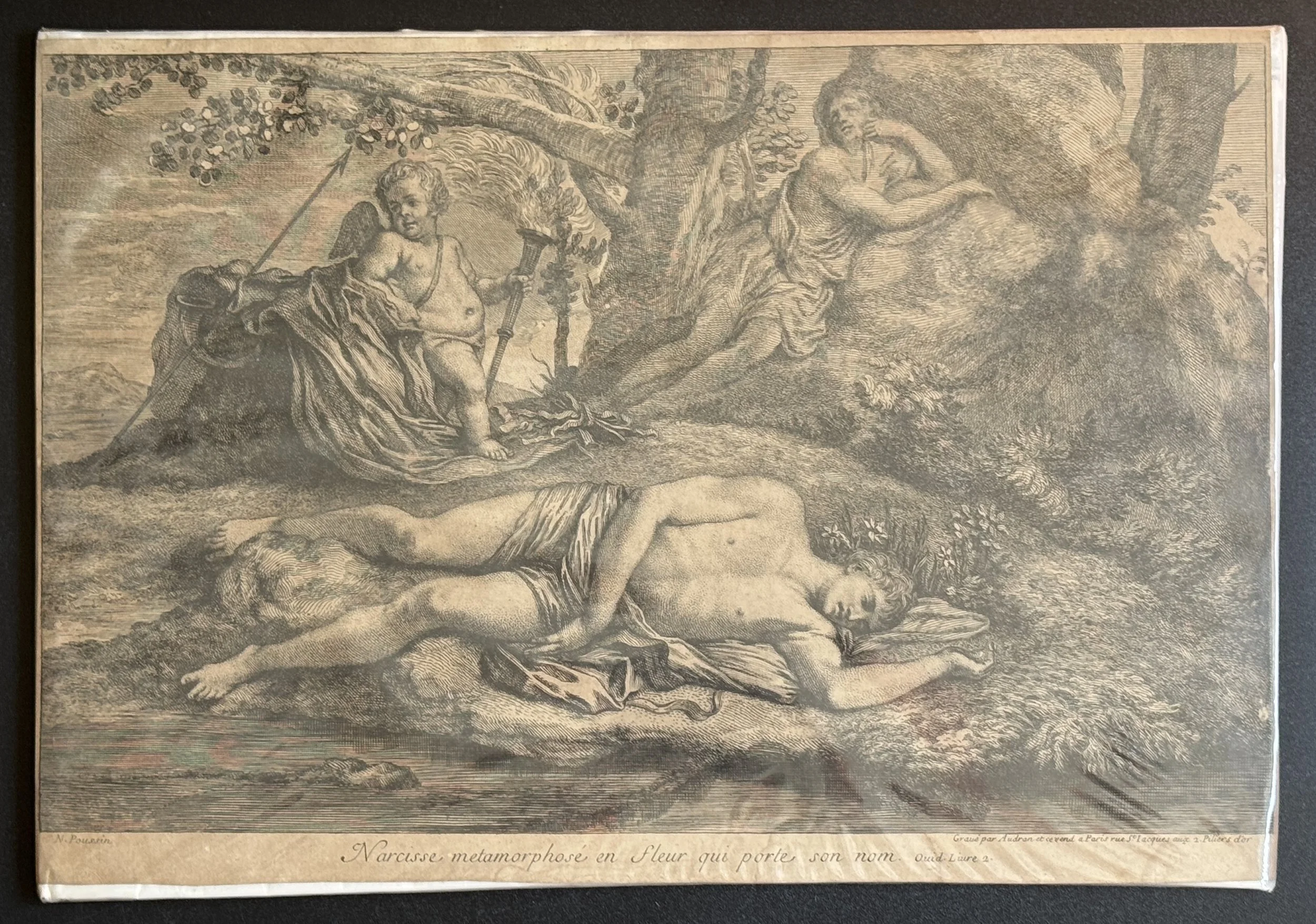
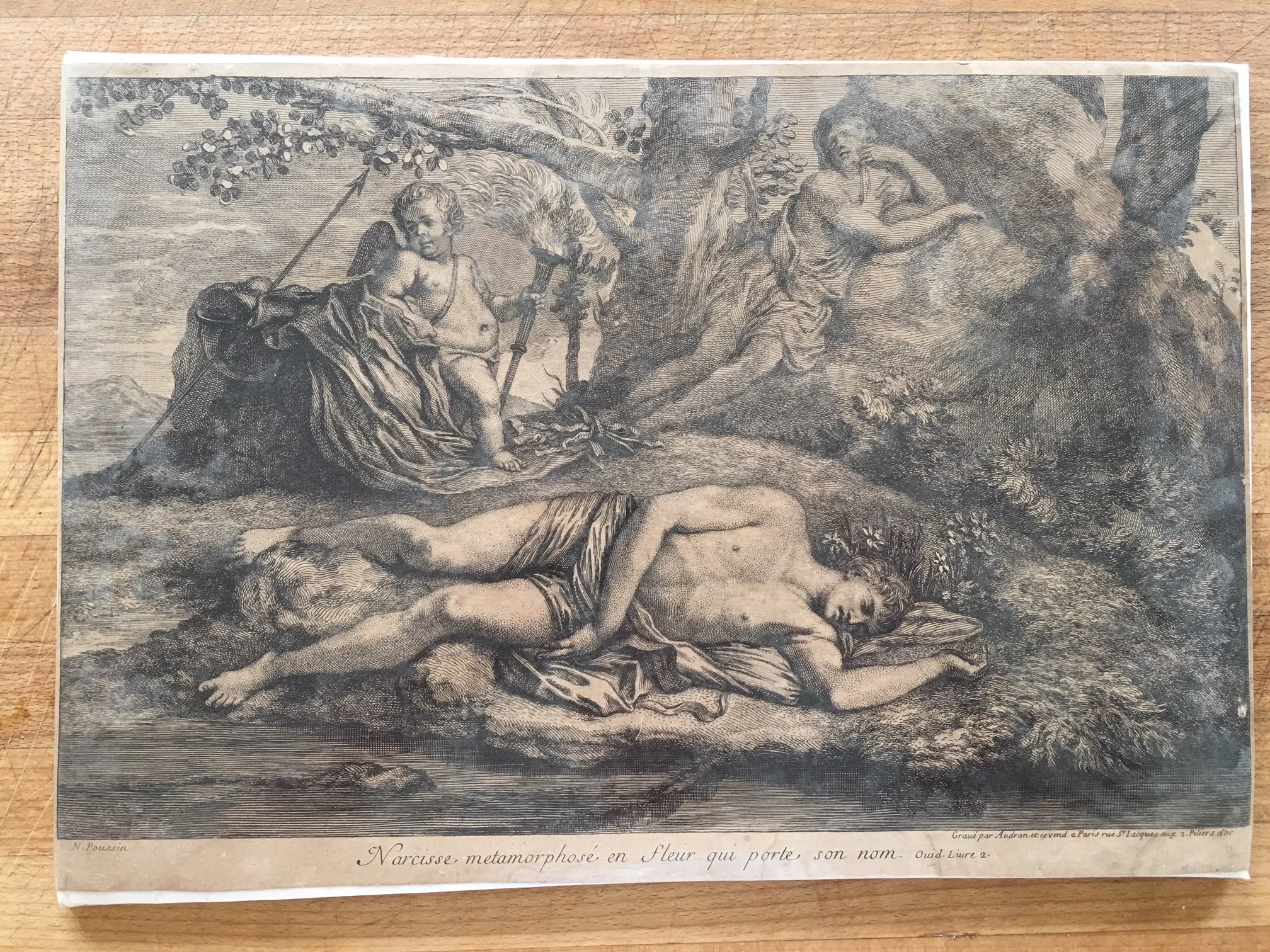
Narcisse Nicolas Poussin. Audran
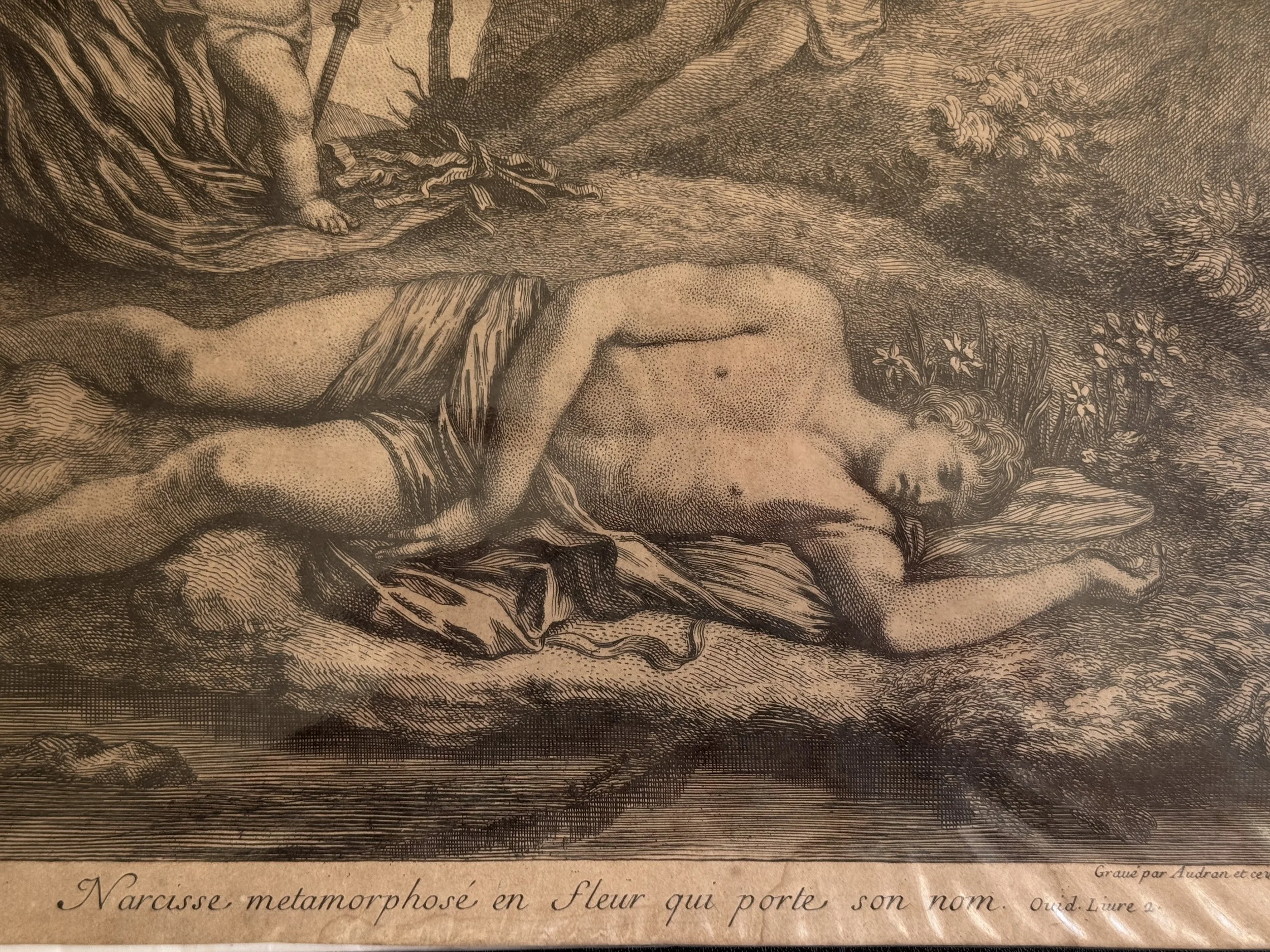
Narcisse métamorphosé en fleur qui porte son nom
(Narcissus transformed into the flower that bears his name)
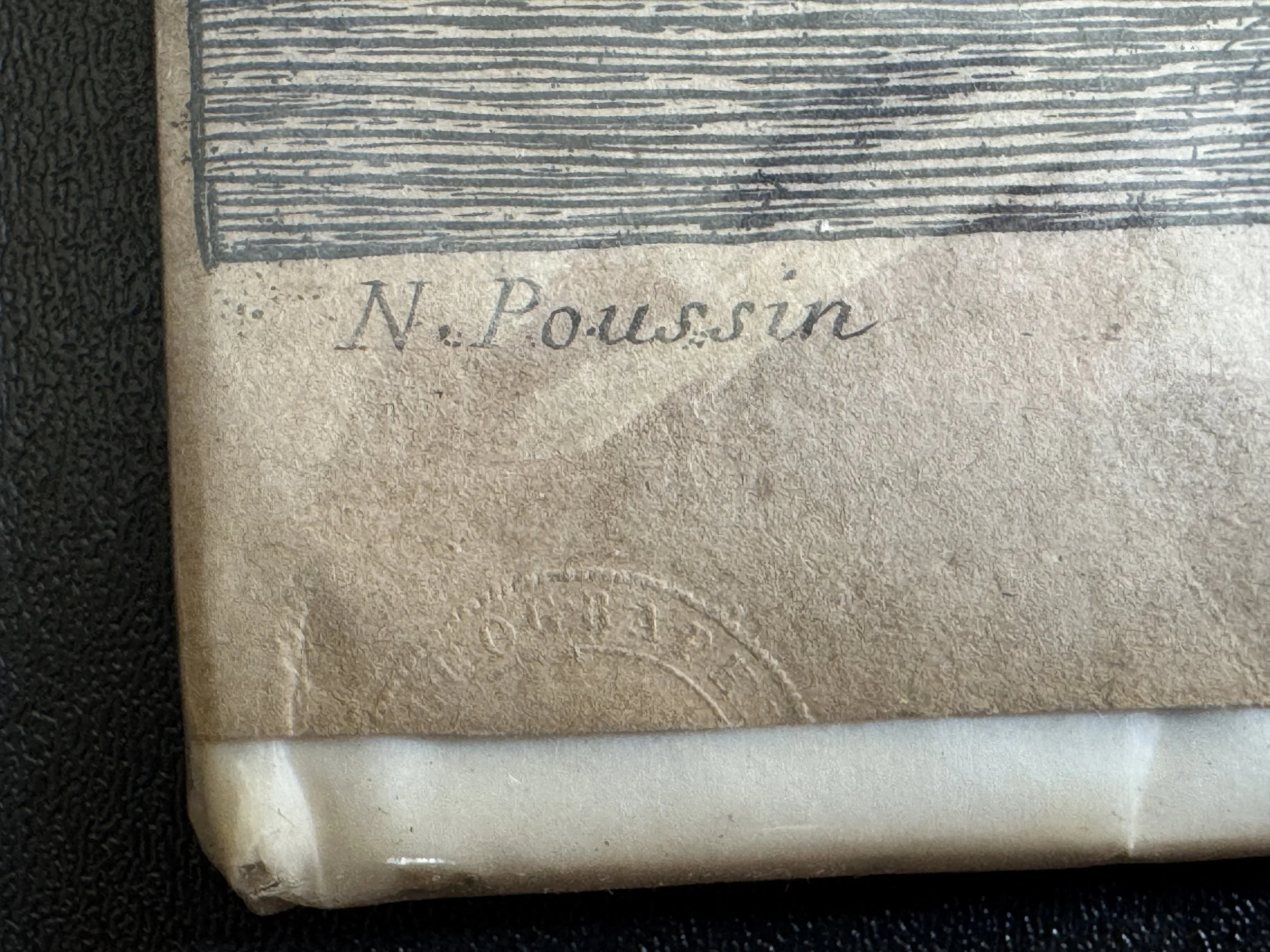
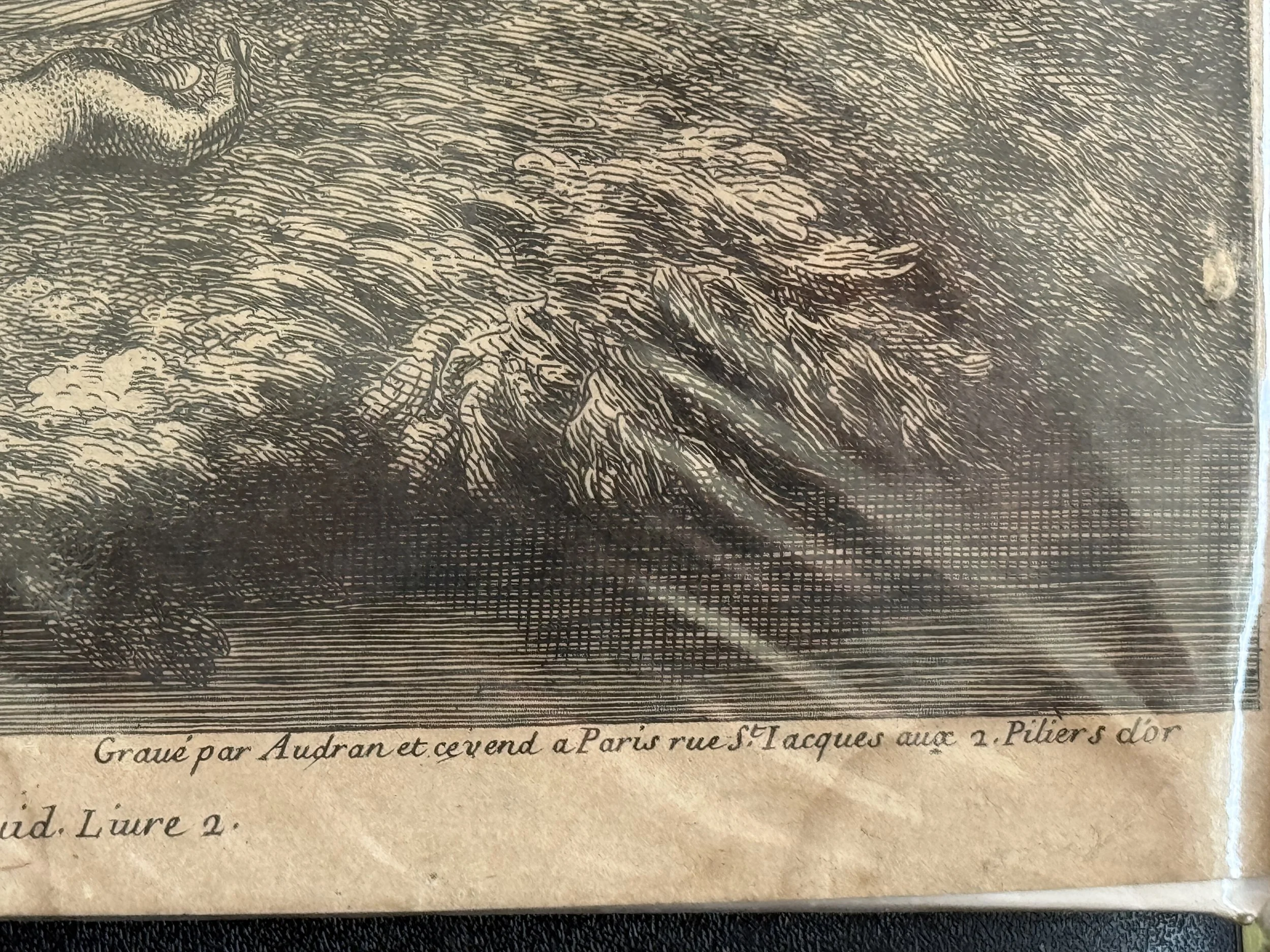
Signed N.Poussin. Graue par Audran (Ovid?) lire 2:
Graue par Audran et cevend a Paris rue St Iacques aux 2. piliers d'or
Stamped La Calcographie du Louvre (The Louvre Print Workshops)
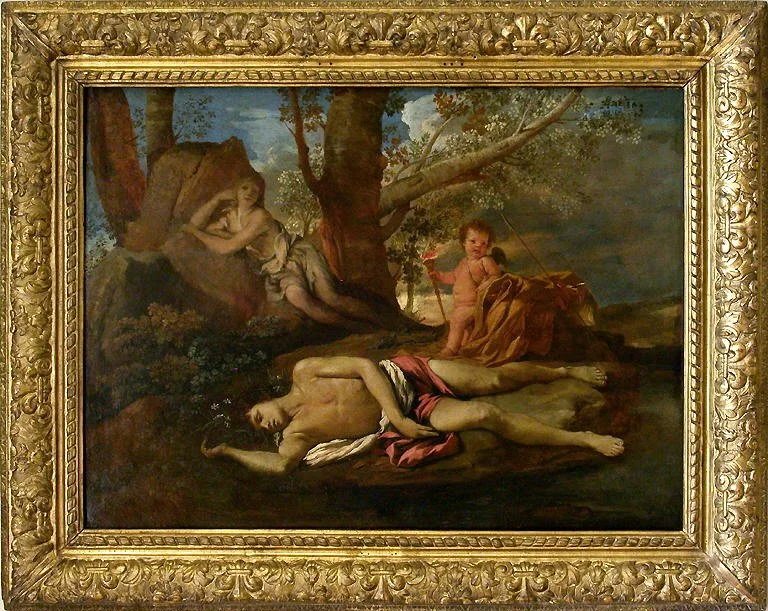
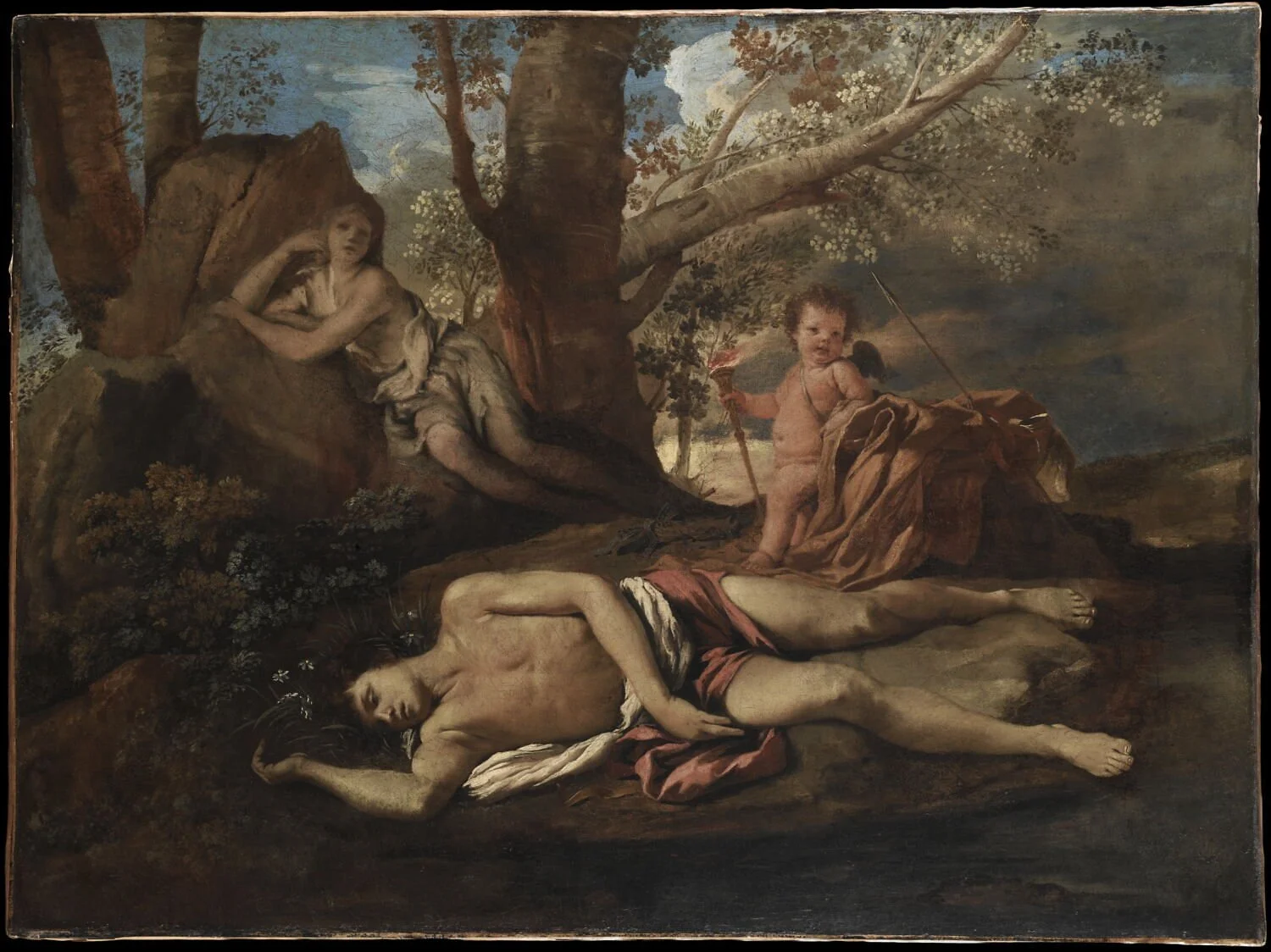
A very beautiful undated late 18th or early 19th century engraving from the original: Nicolas Poussin's Echo et Narcisse c.1627 - c.1628 in the classical style of a mythological scene from Ovid. The original painting is oil on canvas in the Louvre, Paris, France.
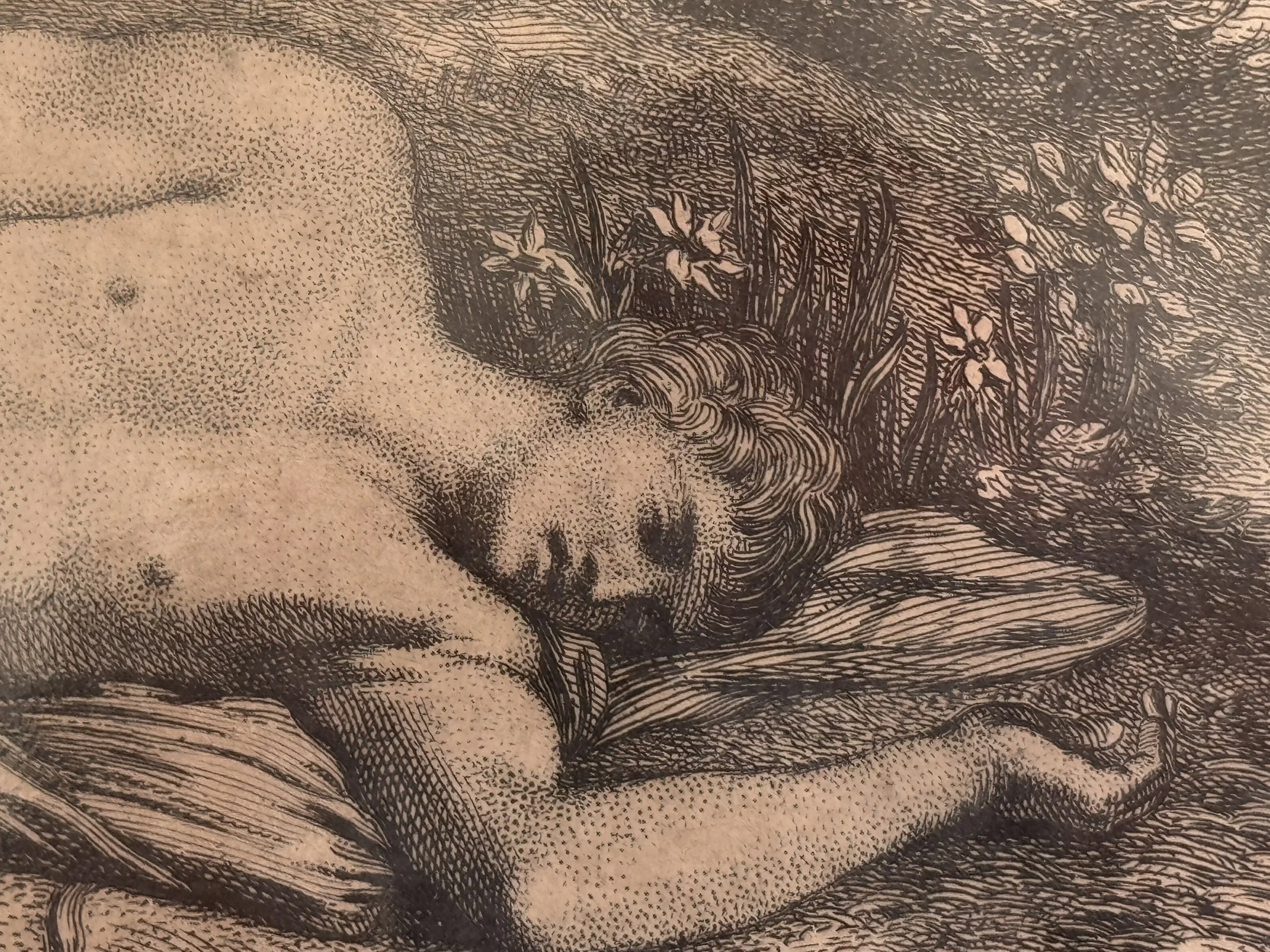
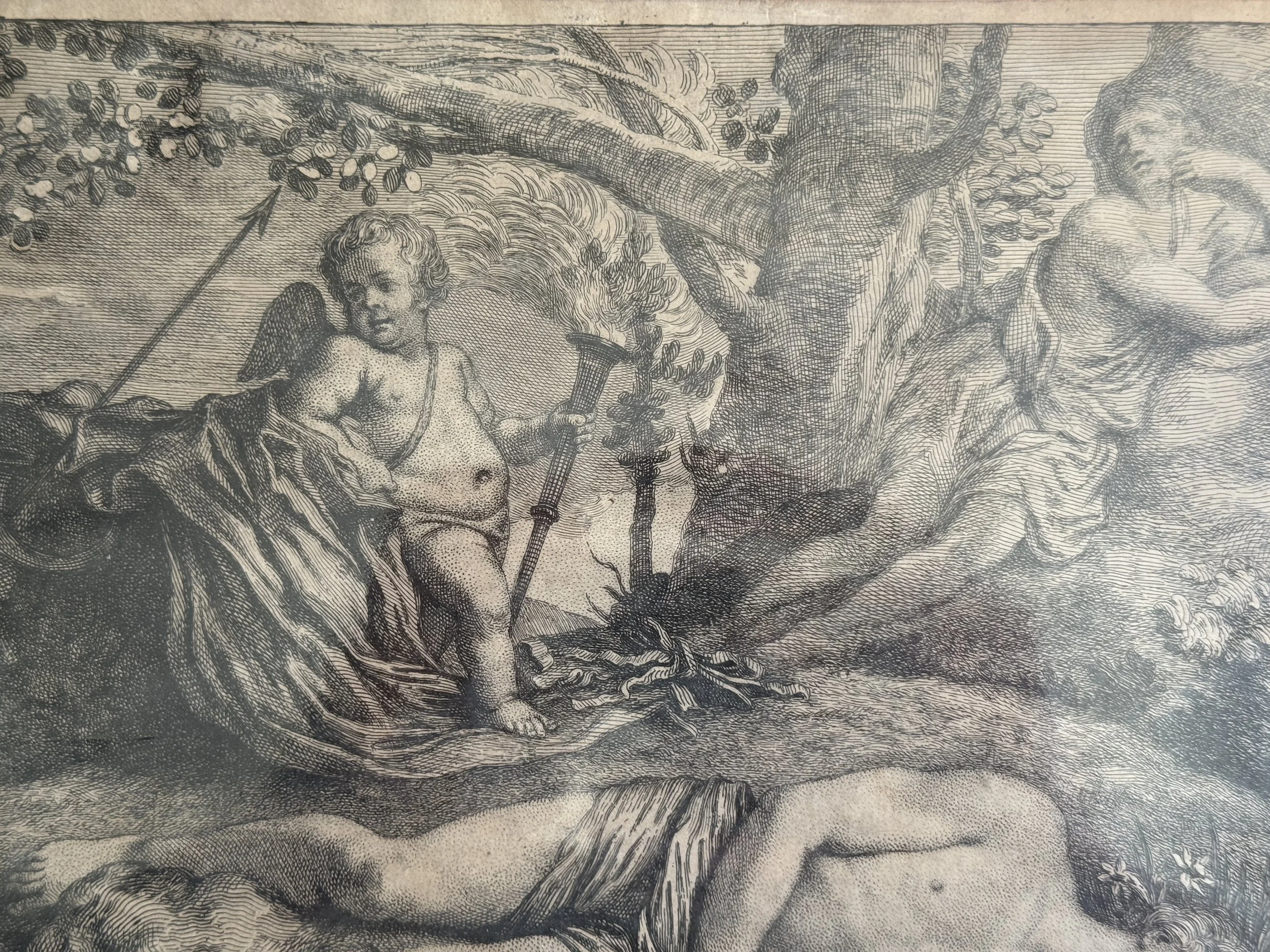
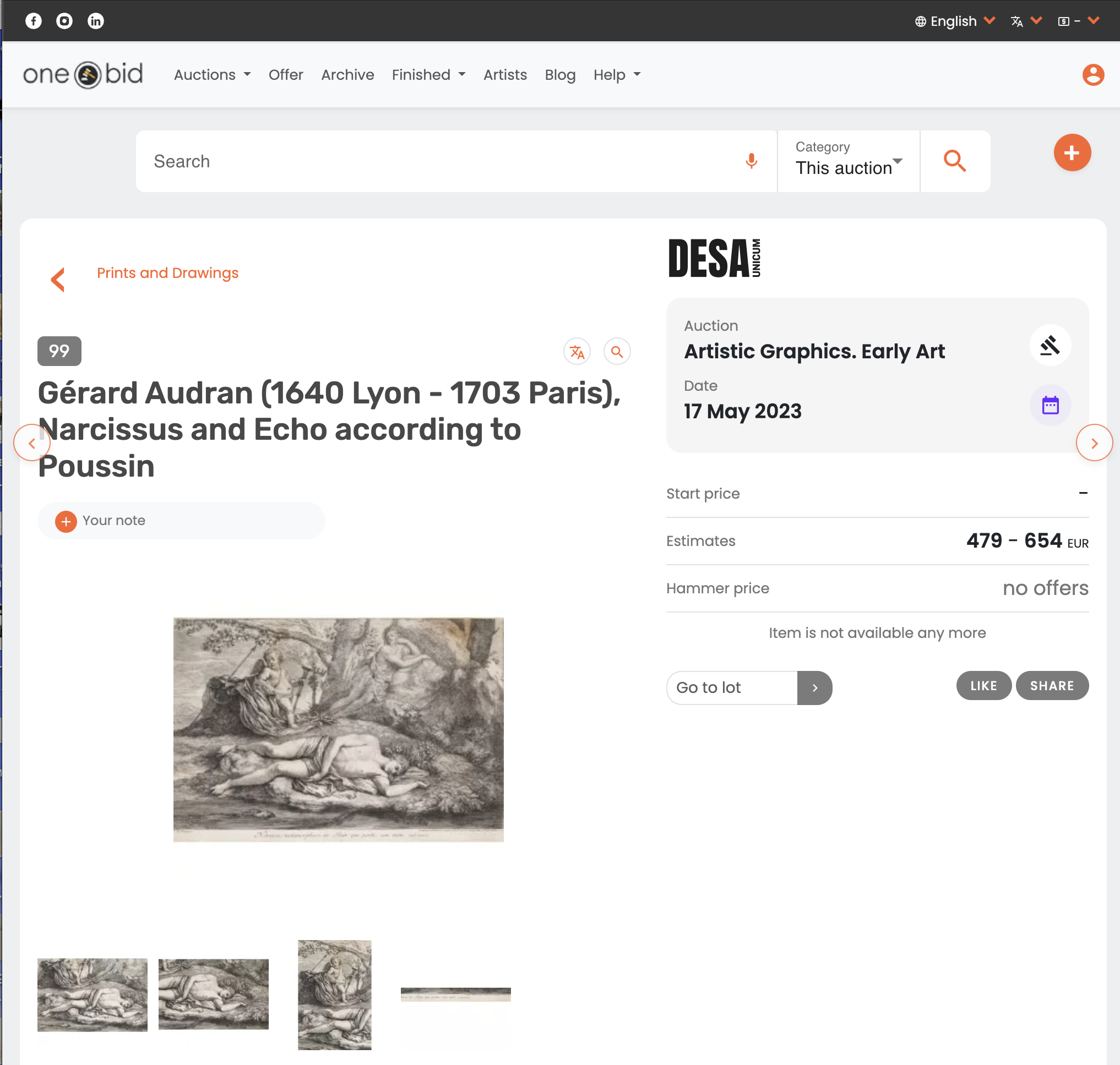
A very rare French engraving of Echo and Narcissus, after Poussin: Narcissus lying on a river bank, with narcissus flowers growing beside his head; in the background, at right, the grieving figure of Echo, turned into a rock; at left, Cupid, holding a torch and leaning on Narcissus's cloak. c.1680 Etching, later reprint. A recent auction valued this print at 479 - 654 euros, see image.
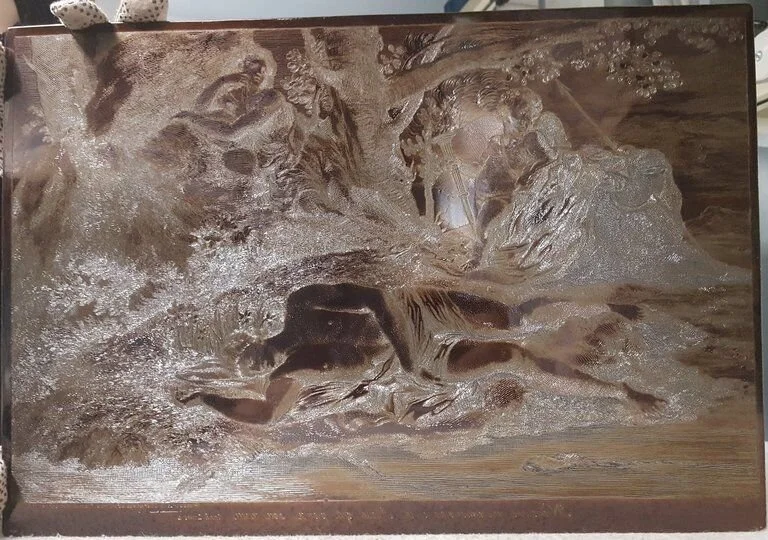
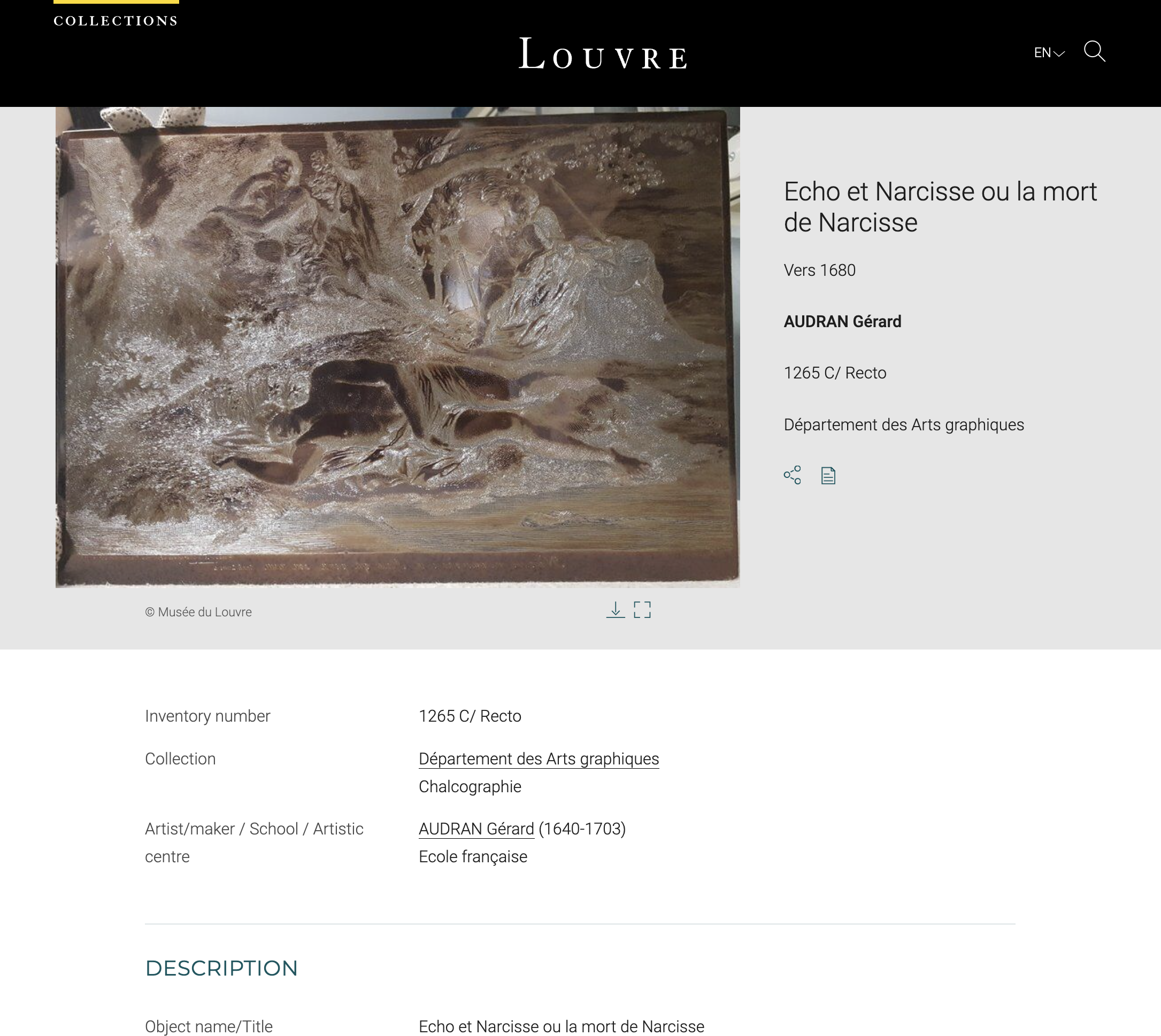
Markings: Apart from N. Poussin and Audran etc, there is a partial embossed round stamp on the bottom left edge that I can't make out, probably a seller's or collector's stamp. I can only read something like LCOGRAFE, a search came up with 'Calcographie du Louvre' as the original painting is in the Louvre, and the workshop began production in 1797 this seems plausible. The copper printing plate is also in the Louvre collection (see image) The Chalcographie du Louvre, "preserves thousands of engraved copper plates. It produces traditional art prints (etchings and engravings, or eau-forte et burin) pulled directly from these historic metal plates." The BM catalogue date estimation for the original impression is 1677-1703.
Dimensions 31.3 cm x 45.5 cm (12,6 x 18 inches approx)
Condition. Paper is toned overall. No tears, losses that I can see, there is a small area of moisture staining to the bottom middle edge. Currently plastic wrapped on a foam-core board for protection. The previous owner liked to do this, and prop them up around their home.
Provernance: Purchased by the consigner from an estate sale at a French château 23 years ago in a damaged gilt frame.
BM Catalogue Entry: 1874,0808.1788
Object: Narcisse métamorphosé en fleur qui porte son nom
Producer name After: Nicolas Poussin
Attributed to: Girard Audran
Published by: Girard Audran
School/style French
Production date 1677-1703 (circa)
Production place Published in: Paris (France)
Europe: France: Ile-de-France (region): Paris (France)
About:
The Audran Printmakers: The print was primarily created and published by members of the illustrious Audran family of French engravers. Gérard Audran (1640–1703) is typically credited with the masterful etching and initial design layout, while his relatives Jean Audran and Benoît Audran I contributed to or finished the intricate line-engraving work
Echo and Narcissus is an oil painting by French artist Nicolas Poussin, from 1627-1628. It measures 74 by 100 cm (29 by 39 in) and is held in the Louvre, in Paris. The work derives from Greek Mythology. According to Ovid's Metamorphoses, the nymph Echo fell in love with Narcissus, but he rejected her. Nemesis, the goddess of vengeance, punished Narcissus by making him fall in love with his own reflection. At the place where he died grew the flower that bears his name: Narcissus.
Poussin illustrates this myth by representing three characters in an idyllic landscape: in the foreground, Narcissus, lying down; behind him, on the right, Eros, god of love; and on the left, sitting on a rock, Echo. Around the hair of the dead young Narcissus are already blooming flowers to which he gave his name. Echo, leaning on a rock, seems "an elegiac and immaterial apparition".
From Ovid:
Bk III:474-510 Narcissus is changed into a flower
He spoke, and returned madly to the same reflection, and his tears stirred the water, and the image became obscured in the rippling pool. As he saw it vanishing, he cried out ‘ Where do you fly to? Stay, cruel one, do not abandon one who loves you! I am allowed to gaze at what I cannot touch, and so provide food for my miserable passion!’ While he weeps, he tears at the top of his clothes: then strikes his naked chest with hands of marble. His chest flushes red when they strike it, as apples are often pale in part, part red, or as grapes in their different bunches are stained with purple when they are not yet ripe.
As he sees all this reflected in the dissolving waves, he can bear it no longer, but as yellow wax melts in a light flame, as morning frost thaws in the sun, so he is weakened and melted by love, and worn away little by little by the hidden fire. He no longer retains his colour, the white mingled with red, no longer has life and strength, and that form so pleasing to look at, nor has he that body which Echo loved. Still, when she saw this, though angered and remembering, she pitied him, and as often as the poor boy said ‘Alas!’ she repeated with her echoing voice ‘Alas!’ and when his hands strike at his shoulders, she returns the same sounds of pain. His last words as he looked into the familiar pool were ‘Alas, in vain, beloved boy!’ and the place echoed every word, and when he said ‘Goodbye!’ Echo also said ‘Goodbye!’
He laid down his weary head in the green grass, death closing those eyes that had marvelled at their lord’s beauty.
And even when he had been received into the house of shadows, he gazed into the Stygian waters. His sisters the Naiads lamented, and let down their hair for their brother, and the Dryads lamented. Echo returned their laments. And now they were preparing the funeral pyre, the quivering torches and the bier, but there was no body. They came upon a flower, instead of his body, with white petals surrounding a yellow heart.
More in store. Please see our other items for a large selection of old, modern, and contemporary drawings.
EU, UK, US Customers: Please note that all taxes, customs fees, import duties, tariffs, and other charges are the responsibility of the purchaser. We provide all relevant documentation for after-purchase charges that may be applied on arrival in your country. Sometimes, there are issues that arise, but please rest assured, we will assist in any way that we can.